How Stephen Gould Scaled Its Capacity by 30% without Making a Single Hire


Plan roadmap initiatives and connect them to business outcomes
Assign tasks, owners, and deliverables across teams
Track progress, blockers, and completion in real time
Connect roadmap initiatives to product analytics data to inform decisions


A product roadmap template only works if your team uses it beyond planning.
Most teams build a roadmap at the start of a quarter. Then execution moves into another tool. Over time, the roadmap stops reflecting what’s actually happening.
A strong product roadmap template fixes that gap. It should give you:
Clear initiative ownership. Every roadmap item has a defined owner responsible for delivery.
Direct connection to outcomes. Each initiative ties back to a measurable business goal.
Live timelines and milestones. Dates update as work progresses, not after the fact.
Task-level visibility. Execution details sit under each roadmap item.
Real-time status tracking. You can see what’s on track, blocked, or complete at any time.
Product analytics integration. Tie roadmap initiatives to usage data from tools like GA4 to validate priorities and measure impact.
Most roadmap issues come from one problem: disconnection between planning and execution.
They’re Built Once, Then Ignored
Teams invest time building a roadmap at the start of a cycle. But once work begins, updates happen elsewhere. Priorities shift, timelines change, scope evolves — yet the roadmap stays the same. It quickly becomes outdated.
Work Lives in Different Tools
Planning happens in one place. Execution happens in another.
Roadmap in slides or spreadsheets
Tasks in a project tool
Updates in Slack or meetings
No single view shows the full picture. That creates confusion and misalignment.
Reprioritization Has No Visibility
Priorities change all the time. But most teams don’t clearly track those changes — no record of why something moved, no visibility into what got deprioritized, no alignment across stakeholders.
Stakeholders Stop Trusting It
When your roadmap doesn't reflect reality, people stop using it. Instead, they rely on status meetings, one-off updates, and direct messages. That creates extra work and slows down decision-making.
Most product roadmap planning templates stop at the planning stage. Slingshot connects your roadmap to execution. Instead of managing multiple tools, you work from a single system where strategy and delivery stay aligned.
With this template, you can:
Tie each roadmap initiative to tasks, owners, and deliverables
Track progress without leaving your roadmap view
Update priorities and have those changes visible to everyone instantly
Give stakeholders a live view of what’s in progress, what’s blocked, and what’s shipped
Layer in product analytics insights from GA4 to understand feature usage and guide roadmap decisions
Initiative Planning
Organize roadmap items by Feature, Initiative, Priority, and Timeline. Add context, set ownership, and flag dependencies before work begins.
Progress Tracking
See the status of every initiative at a glance: what’s in progress, what’s completed, and where work is stalling.
Task-Level Execution
Break roadmap items into tasks with assigned owners and deliverables. Execution stays connected to strategy.
Roadmap Views
Visualize timelines, priorities, and dependencies. Get the perspective your team needs, whether you're planning a sprint or presenting to leadership.
1. Define roadmap initiatives and outcomes
Add each initiative with a clear outcome, priority level, and target timeline.
2. Break each initiative into tasks
Assign owners and attach deliverables so every roadmap item has a clear path to completion.
3. Assign ownership and accountability
Everyone knows what they’re responsible for.
4. Track status as work moves forward
Update priorities, flag blockers, and keep stakeholders in the loop without a separate status meeting.
5. Adjust and iterate
As execution data comes in, update your roadmap. Reprioritize initiatives, shift timelines, and document the reasoning — all in one place.
Product teams rarely manage roadmaps in isolation. These related templates help teams plan sprints, track bugs, and coordinate project execution across the full product cycle.
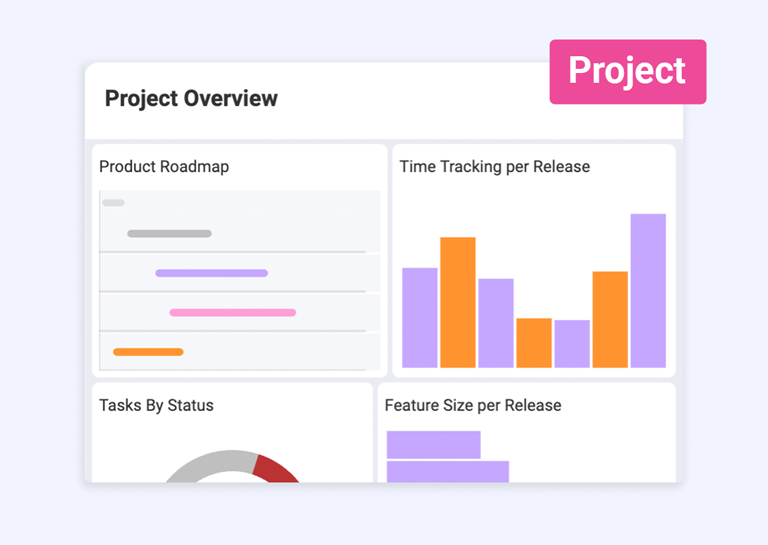
Plan product initiatives, prioritize features, and track progress across your roadmap in one place.